


5 Ways to Make Learning REAL
Learn how to make lessons meaningful with 5 real-world strategies that connect classroom content to students’ lives, increasing engagement and motivation.

Share
March 26, 2026
Learn how to make lessons meaningful with 5 real-world strategies that connect classroom content to students’ lives, increasing engagement and motivation.
Share
Do you have students who ask why they have to learn something? That’s actually hardwired into their brains. They need to see the relevance of learning to be motivated.
When my niece was in the first grade, her teacher used the names of her dogs in a math word problem. That was relevance for her! When my stepson was in middle school, his math teacher was determined to connect with him, especially because he didn’t like math. She assigned the class a project, asking students to demonstrate what they knew about geometry, presenting in a way that interested them. She talked to Hunter, reminding him how much he loved to skateboard and film his friends skateboarding. So his project was to film his friends doing skateboard tricks and narrate how the tricks used geometric principles. That was relevance for him!
What you want to do is find ways to help your students discover how their learning links to their lives.
As you can see, relevance can be different depending on the age of your students. What you want to do is find ways to help your students discover how their learning links to their lives.
Eric Robinson teaches students in his classes at Saluda Trail Middle School how to write a resume. Then, he and his colleagues work together to show them how to select colleges/universities, the types of degrees, and job descriptions. As he explains:
They do a rough draft of the resume; then, after we work out the mistakes, the students type their resumes along with a cover letter. Once I approve the typed resume, the students set up an interview with an administrator or teacher who is part of the interview team. Prior to setting up an interview, each student has a class in interview etiquette. In this class, the students learn how to enter the door to the interview, how to talk, eye-to-eye contact, body posture, and good communication skills with the interviewer.
Look at how this example for a middle school language arts essay incorporates real life:
In the story "People Call Me Crazy" by Gary Paulsen, how does the character of Thatcher embody the theme of perseverance? Provide evidence from the text that supports your perspective. Additionally, choose a situation in real life in which someone persevered. Justify your response. Based on the work, create a video on the importance of perseverance.
Students can build their own learning adventures by designing interactive stories and virtual simulations based on real-life scenarios. Putting students in the driver’s seat, they are able to determine the possible paths and consequences that might result from various decisions and choices made. This could be helpful when thinking through the scientific process for an experiment, contemplating the impact of a character’s actions or dialogue in various scenes of the book, or simulating difficult choices historical figures have made in the past.
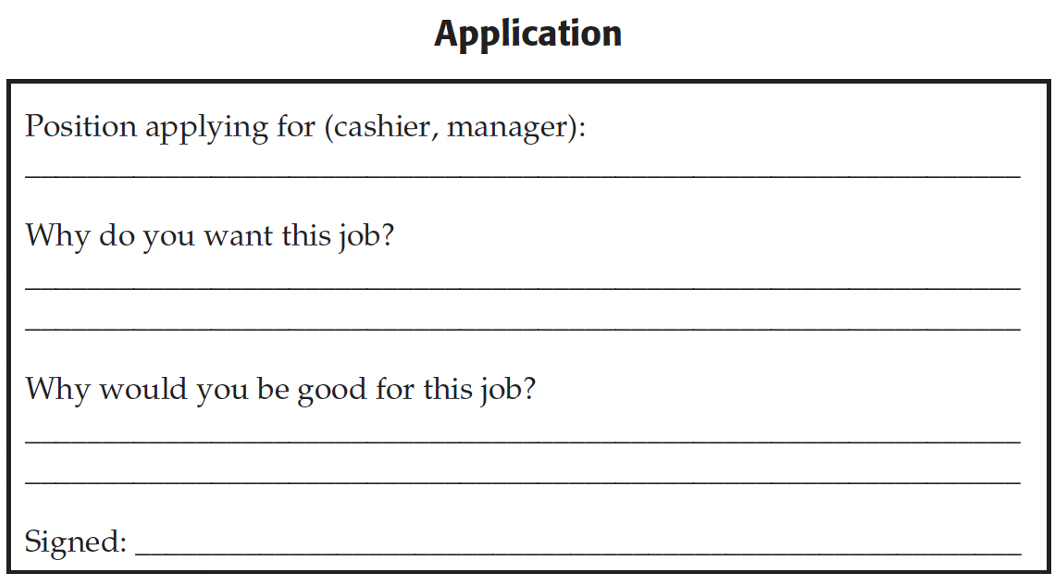
Students are never too young to experience real-life learning. Erin Owensn creates a fun taste of reality for her first-graders. As a culminating activity for an economics unit, the class takes a field trip to a Krispy Kreme doughnut store. They observe real-life examples of key concepts: marketing (posters and signs), jobs (cashier, doughnut maker and manager), goods and services, and teamwork. To apply what they have learned, they set up a class store. As a group, they determine the store name, what to sell, costs and needed materials, how to market the store, and the necessary jobs. “All of this took teamwork and in the process, the students took ownership of their learning. It was amazing to see the application of concepts in progress,” Owens says. “They had job applications divided into teams and thought of everything we would need to effectively run the store. I served as facilitator and material gatherer; they planned everything. At the end, the other first-grade classes came to purchase our bookmarks.” See the following application example.
Former high school teacher Jason Womack points out that connecting with real life is also about using students’ prior knowledge to facilitate new learning: “My favorite example of this was when I was working with a student
group on World War II and the postwar years testing of nuclear and atomic devices. I had a group of students [in Southern California] who were surfers, and one of the assignments that I gave for this group of students was to go and find out what the surfing was like through the 1950s and 1960s, which was when it was just starting in that community. A lot of students came back and said they did not realize how much damage was done in the Pacific Ocean around nuclear testing and atomic testing.” His purpose wasn’t to make a judgment on whether the decisions about testing were good or bad; he wanted his students to think about how things impact their daily life.
Helping students see the relevance in learning motivates them and engages them at a higher level. Incorporating real-life connections to your lessons will matter to your students.
This curated career exploration collection offers lessons on potential careers, pathways into those careers, how to create a career portfolio, gap year opportunities, positive changes that individuals have made through their chosen careers, and more.
View this specially, curated collection of lessons and educational resources to support you in incorporating project-based learning and growth mindset activities into your classroom.