What the History of the Purse Reveals About Women’s Autonomy
Explore how the everyday purse reveals a deeper story about women’s independence, mobility, and financial autonomy. From hidden pockets to modern handbags, this overlooked accessory reflects changing gender roles and expanding freedoms.
Women’s History Month often highlights trailblazers, women who broke barriers in education, politics, science and activism. Their stories matter. But history is not only told through famous speeches, landmark legislation, or well-known biographies. Sometimes it is hidden in everyday objects we rarely think twice about: clothing, tools, household items, accessories, for example. These everyday items can reveal a great deal about power, independence and social expectations. One particularly revealing object is something many people carry every day: a purse.
At first glance, a purse might seem like a simple accessory. But its history reflects changing ideas about women’s autonomy, mobility and financial independence. Looking at the purse historically can help us see how gender roles have shaped even the smallest parts of daily life.
A World Without Pockets
To understand the purse, it helps to start with pockets.
In early modern Europe and colonial America, men and women both used pockets, but they were not built into clothing. Instead, pockets were separate fabric ties around the waist and worn under garments. Women accessed them through slits in their skirts. These pockets allowed women to carry personal items such as money, keys and sewing tools.
By the late 18th and early 19th centuries, fashion trends changed dramatically. Women’s dresses became slimmer and more form-fitting, making it difficult to hide pockets underneath. As a result, women’s clothing largely lost functional storage space.
Men’s clothing, on the other hand, evolved in the opposite direction. Men’s coats, vests and trousers gained multiple sewn pockets, reinforcing the expectation that men would carry money, documents and other practical items as they moved through the world.
Women, lacking pockets, needed another solution.
The Rise of the Reticule
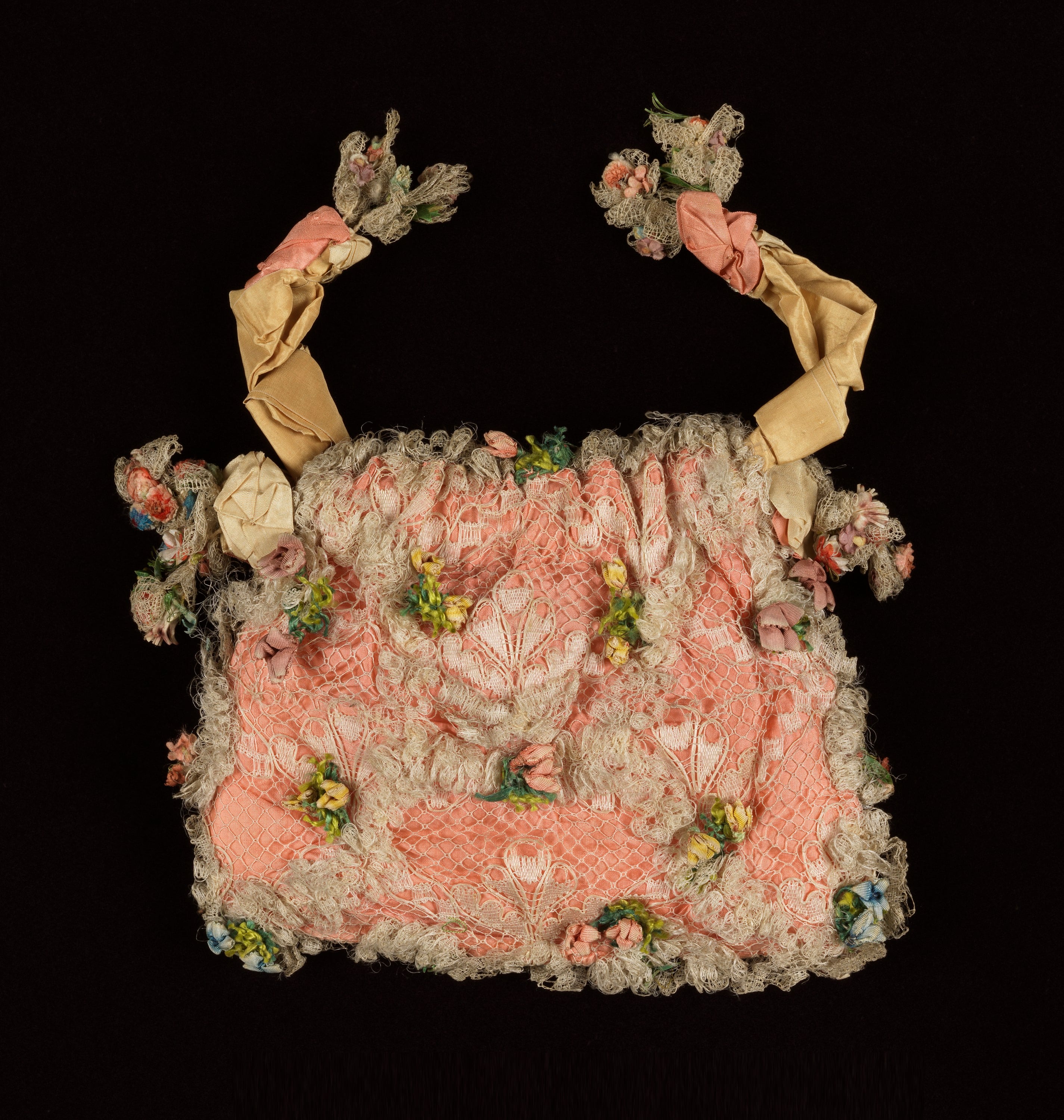
Cooper Hewitt, Smithsonian Design Museum, Public domain, via Wikimedia Commons
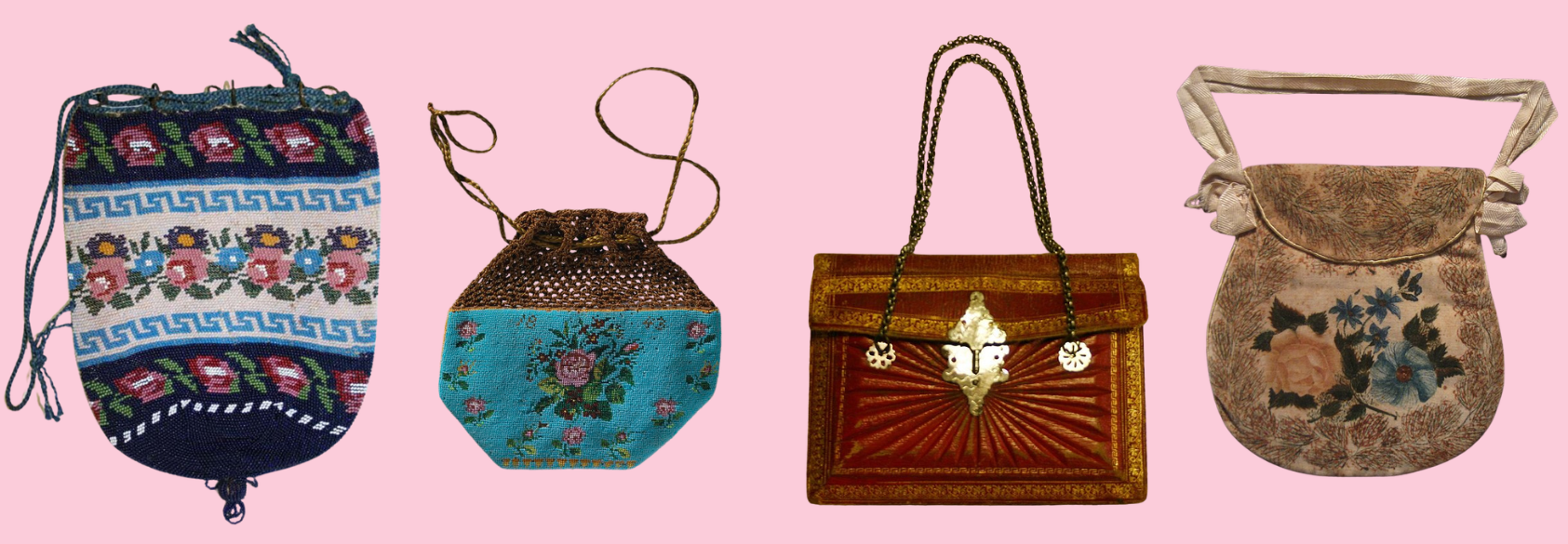
In the early 19th century, women began carrying small handheld bags known as reticules. These delicate drawstring bags were often embroidered or decorative, reflecting the expectation that women’s belongings should be associated with beauty rather than practicality.
Reticules were small and often impractical. They could hold a handkerchief and a few coins, but not much more. Yet they quickly became a common accessory.
While they solved the problem created by the disappearance of pockets, they also reflected broader cultural assumptions about women’s place in society. Women were expected to carry only small personal items, not business papers or work-related tools. The limited size of these bags mirrored the limited public roles available to women at the time.
Mobility and the Modern Handbag
As the 19th century progressed, women’s roles slowly began to change. Industrialization, urbanization and expanding educational opportunities allowed more women to move through public spaces independently. Objects changed alongside these shifts.
Larger handbags began appearing in the late 19th and early 20th centuries, reflecting women’s growing mobility. Travel bags, satchels and structured handbags became more common as women began commuting, working outside their homes, and traveling more frequently.
The growth of department stores and consumer culture also played a role. Companies such as Hermes and Louis Vuitton, which originally produced luggage and travel goods, began designing bags that reflected modern lifestyles.
Carrying Money, Carrying Independence
Perhaps the most important shift in the history of the purse is tied to financial independence. For much of American history, married women had limited legal control over property and finances. This began to change with laws such as the Married Women’s Property Act, passed by many states during the 19th century. These laws allowed married women to own property and control their own earnings. As women gained greater legal and economic autonomy, the purse took on a new meaning. Carrying money, identification, and personal belongings became part of everyday independence.
By the 20th century, the handbag had evolved into a practical object designed to carry wallets, notebooks, cosmetics and other essentials.
What Objects Reveal About History
For educators, everyday objects can be powerful entry points into historical thinking. Students often assume history is only about major events or well-known figures, but objects allow them to see how social norms shape daily life in ways that are easily overlooked. Using objects (such as the comb) and fashion trends as historical evidence encourages students to think critically about the relationship between culture, design and power.
Use these timely preK-12 lesson plans and class activities to incorporate key figures and historical events in your Women’s History Month lesson planning. This Share My Lesson collection spans topics like women’s suffrage and women’s rights and features influential women in science, social justice and rock-and-roll.
Aayushi Doshi is a graduate student in Education Policy Studies at George Washington University, based in the Washington, DC area. She currently serves as an intern at the American Federation of Teachers, where she supports work focused on strengthening the public education workforce. Her... See More