What's Past Is Prologue: Diplomatic Echoes of Statesman Dr. Ralph J. Bunche
Explore how art and history intersect in Kerry James Marshall’s Souvenir II and the diplomatic legacy of Nobel Peace Prize winner Dr. Ralph J. Bunche. This powerful reflection connects Black History Month, civil rights, and global leadership to inspire the next generation.
As many have stated today and in the past, the history of African Americans is indeed the history of the United States and should not be relegated to one month of the year. One may argue that history is learned throughout one’s life, and the month of February serves to highlight that which you may have forgotten or perhaps never knew. However, if the impact and contributions of African Americans had initially been included in standard school curriculum, there wouldn't have been a need for Dr. Carter G. Woodson to create the celebratory week in 1926.
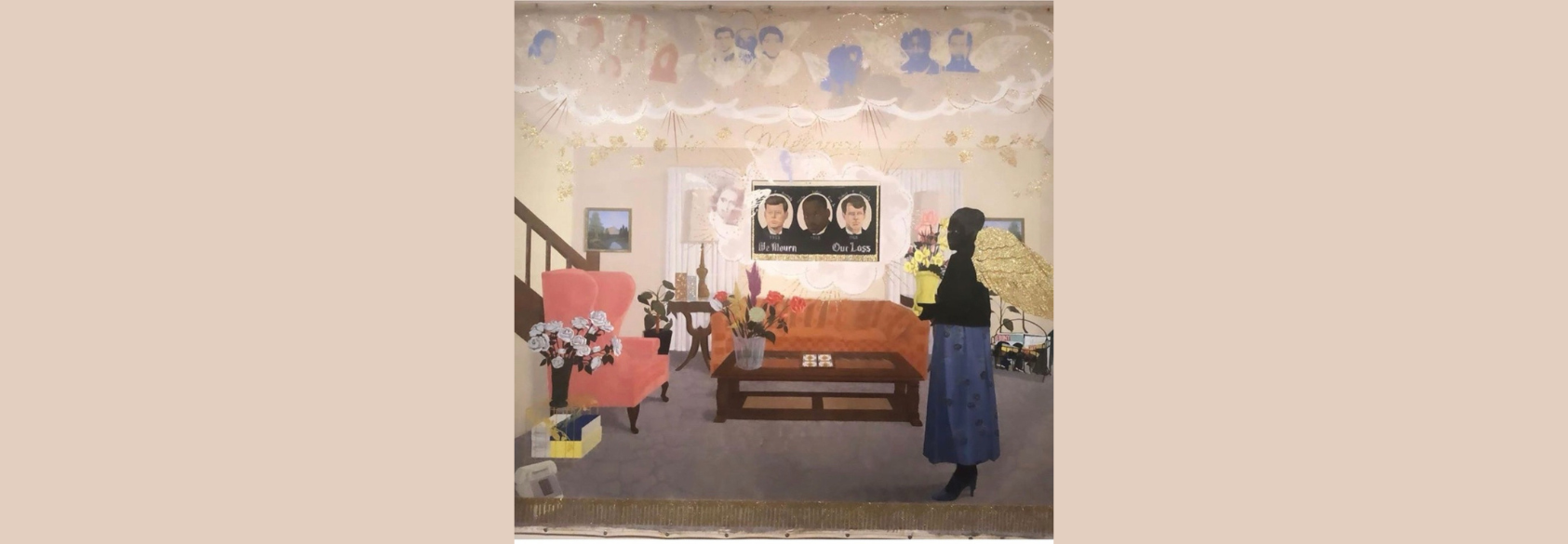
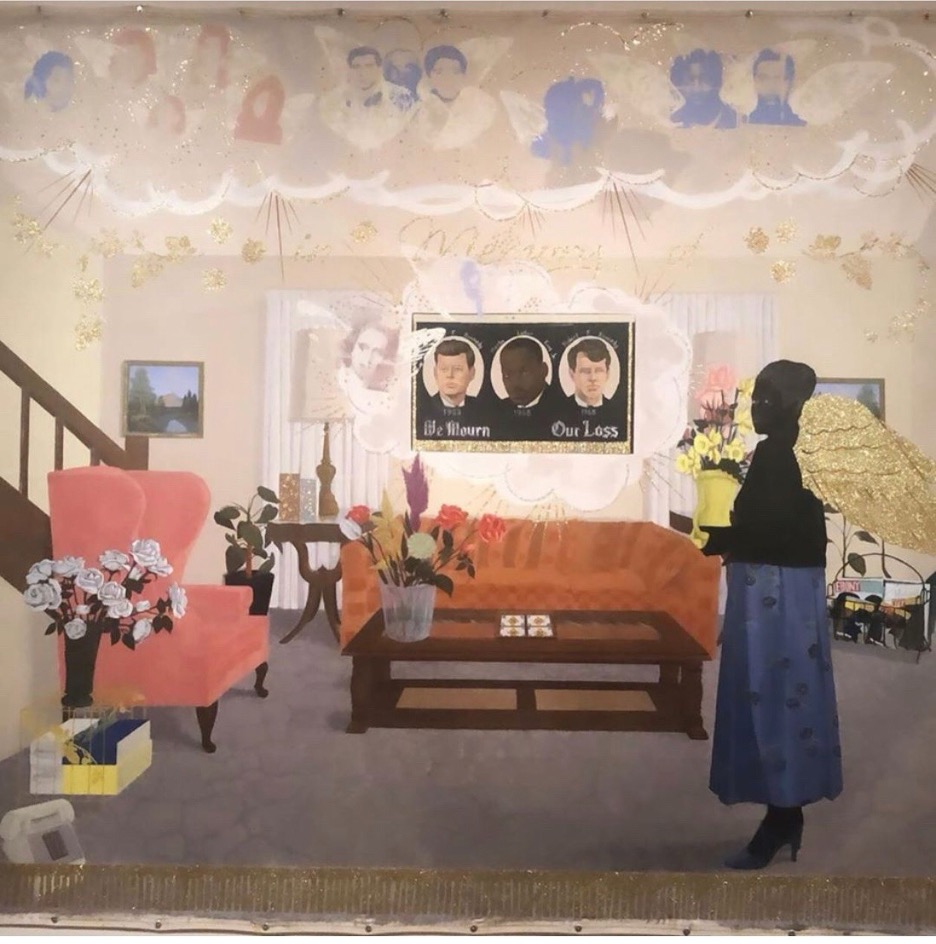
Kerry James Marshall: The Histories was a powerful and expansive exhibit (the largest outside the U.S.) recently displayed at London’s Royal Academy of the Arts. Marshall, renowned as a painter of African American history, is an artist whose work ranges from the 1980s to the present with notable exhibits throughout the U.S., including Chicago, Los Angeles and New York. His pieces are colorful with expressions of whimsy and joy depicting modern life and serious with depictions of the Black Panthers and the African slave trade. The image above is a Marshall painting titled Souvenir II. Anyone with knowledge of African American grandmothers from a certain period will note a familiarity in this depiction of the decorated front room always presentable and ready for company with black-and-white photos of civil rights leaders displayed and Ebony magazines neatly arranged in a polished magazine rack. This colorful painting shows us the dreams and optimism of a difficult period rife with tragedy and political unrest. Though weary of that which was never really fully realized, activists of the time are memorialized, and the angel with brilliant gold wings calls us to remember.
Let’s take a look at the contemporary foundation of international accountability and the hero of United States diplomacy: Dr. Ralph J. Bunche.
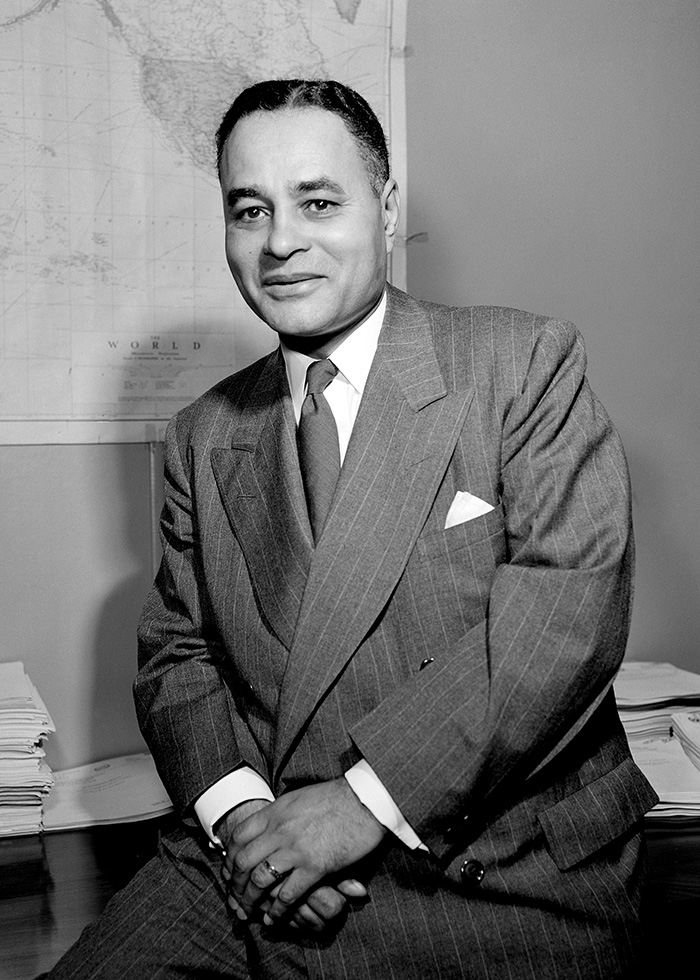
What are those tangible and intangible factors that foster an individual’s passion for learning and perseverance in a time of legalized discrimination, as well as the spirit to maintain an unwavering principle of responsibility not only to one’s country but also to the world? The renowned scholar and diplomat Ralph Bunche, the first African American to win a Nobel Prize and principal architect of the United Nations, possessed such qualities and more.
When I was growing up, my sibling and I were surrounded by an eclectic assortment of books and children’s magazines. Included in our respective bookcases were sets of biographies called ValueTales by Ann Donegan Johnson and Dr. Spencer Johnson. Each colorfully illustrated book highlighted a historic figure and a specific value reflective of their life’s work. Also included was a detailed black-and-white fact page in the back of the book to offset the fictional components. Bound in gleaming white hardback covers, the 11 x 8-inch books highlighted exaggerated and enchanting animated figures holding or in close proximity to a key feature of their work: Louis Pasteur looking through a microscope; Nellie Bly seated at a typewriter. Some titles include: The Values of Truth and Trust: The Story of Cochise; The Value of Determination: The Story of Helen Keller; and The Value of Responsibility: The Story of Ralph Bunche. A cheerfully illustrated Dr. Bunche stood with his arm around a disproportionately sized and personified United Nations building surrounded by the flags of member nations. As children, we read of the love within his family and his maternal grandmother who moved Bunche and his sisters to Los Angeles following the death of his mother in Albuquerque, N.M. We learned of hardships, the ever present influence of his late mother and grandmother pushing Bunche to excel in his studies, and eventually his role on the world stage via the State Department and in a principal role that led to the creation of the United Nations.
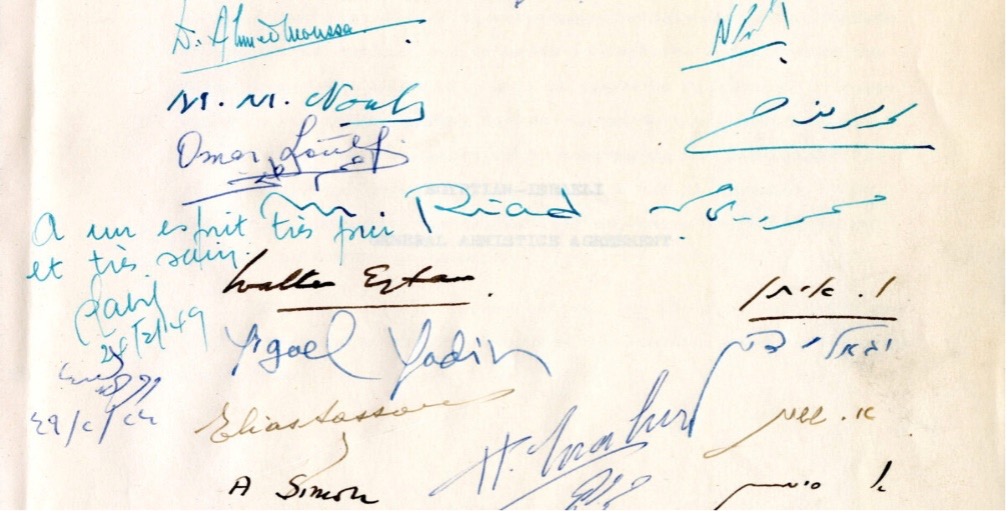
The significance of this book among such others is the contribution to a child’s well-rounded development through exposure to significant figures whose work has had a notable impact domestically and/or globally. Everything we experience and learn as children is evident in our thoughts and sometimes unconscious actions as adults. In this case, an African American whose work as a skilled mediator and head of a U.N. peace-seeking Palestine commission in the 1948 Arab-Israeli conflict—11 months of steady negotiations resulting in a signed armistice agreement in 1949 between the new state of Israel and regional Arab nations—which led to the Nobel Peace Prize in 1950.
When Bunche returned to the U.S. following the signed armistice, New York City celebrated his achievement with a ticker tape parade, and Los Angeles declared a Ralph Bunche Day. He received numerous requests to lecture, was awarded the Spingarn Prize by the NAACP in 1949, and was given over 30 honorary degrees within the following three years.
Yet, Bunche remains a relative unknown. Such exposure, as in this book, seeks to ensure a more knowledgeable, empathetic and globally aware and concerned generation. Schools, museums, libraries, social media platforms and parents are partners in the education of our children.
We can help by filling in the areas that now have blank spaces.
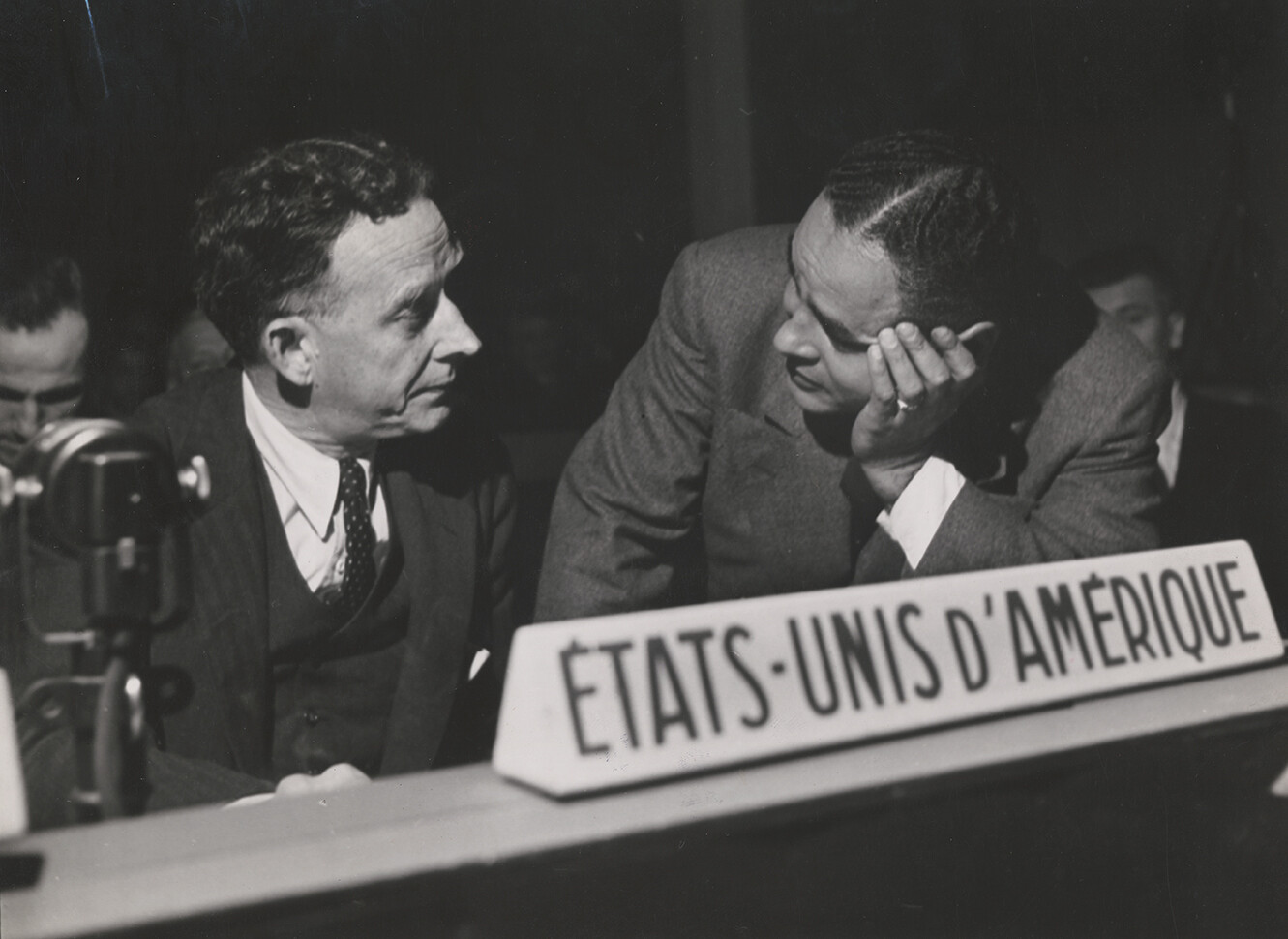
The fight for civil rights was a prominent factor that prepared Bunche for a career as a skilled diplomat. In 1936, he helped establish the National Negro Congress, which sought to bring together African American leaders in many fields to push for labor and civil rights. During World War II, Bunche served in the Office of Strategic Services before transferring to the State Department where he became the first African American desk officer. He was soon promoted, and in 1945 he worked on the section of the U.N. charter focusing on trusteeship (a transition program to self-governance and eventually independence from colonial powers) and the future of areas of the world that were not self-governing. He became a member of the U.S. delegation at the founding of the United Nations in 1945, serving consecutively as acting chief of the Division of Dependent Area Affairs, commissioner of the Anglo-American Caribbean Commission and, in 1946, as director of the Division of Trusteeship.
Black History: Celebration as Resistance
In this inspiring blog from Share My Lesson, educator Heidi Goger reflects on her own experiences organizing the first Black History celebration at her high school and draws connections to today’s struggles for representation and equity. The post highlights how honoring Black history — in classrooms and communities — isn’t just a joyful act but an important act of resistance against exclusion and erasure. It’s a powerful reminder that celebration and resistance go hand in hand in the ongoing fight for justice.
Bunche joined the UN Secretariat (executive branch and administrative body) in 1947, where he developed the guidelines under which many territories gained nationhood. Bunche knew that self-determination in the colonies was crucial to world order and international peace, unlike Winston Churchill who was an adamant critic of self-determination as applied to current colonies within the British “empire.” Bunche was aware this could not be done in isolation or independently without direction and established economic and technical assistance programs for newly independent nations and used the media to focus attention on the issue of decolonization.
Like every Negro in America, I’ve been buffeted about a great deal, I’ve suffered many disillusioning experiences. Inevitably, I’ve become allergic to prejudice. On the other hand, from my earliest years I was taught the virtue of tolerance; militancy in fighting for rights—but not bitterness. And as a social scientist I’ve always cultivated a coolness of temper, an attitude of objectivity when dealing with human sensitivities and irrationalities, which has always proved invaluable. …
*Note: In the early 20th century, “Negro” was an acceptable term as noted in its use by Ralph Bunche in the 1950 quote. It has since been replaced by “Black” or “African American.”
Education
Ralph Bunche was born in 1904. His mother was an amateur musician, and his father was a barber in an all-white barber shop. Bunche and his two sisters moved with their maternal grandmother, who was born into slavery, to Los Angeles after the death of his mother in 1917. He excelled in school and anticipated membership in the citywide high school honor society only to be snubbed due to his race.
... [My] race and not my grades had kept me out of the citywide high school honor society. The names of the prospective honorees were read off at a meeting of the senior class [... and] since my grades were the highest in the class, I had expected to be included. When my name was omitted, I instinctively assumed it was because of my race, and so did some of my classmates and at least one of my teachers, who immediately expressed to me their indignation that my color should have been held against me.
I was humiliated and deeply wounded, and on angry impulse decided to leave school, abandon graduation and never return. But after a while I thought of that talk with my mother, subdued my emotions, decided that I could get along without the honor society, and finally found myself delivering the commencement address at graduation. I assumed that the latter was a “consolation prize” for me. Naturally, my experiences with racial prejudice have never been pleasant, but I have never let any of them trouble me very much or cause me to become embittered.
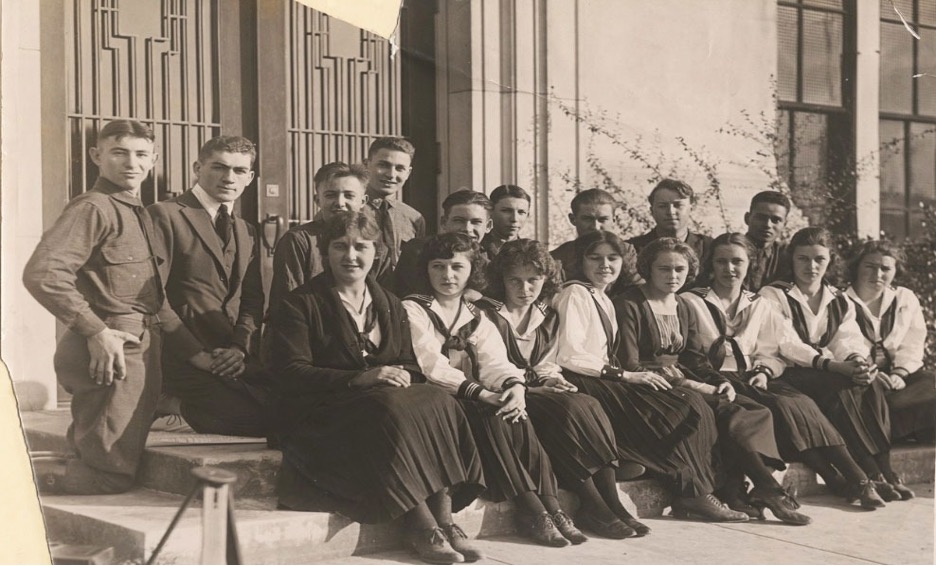
Ralph Bunche with Jefferson High School classmates in January 1922. UCLA Library Special Collections
Bunche went on to graduate from the University of California at Los Angeles in 1927 and Harvard University in 1928. His doctoral dissertation, “French Administration in Togoland and Dahomey,” received the Toppan Prize in 1934. Bunche also became the first African American to earn a Ph.D. in political science from an American university. Bunche went on to Northwestern University, the London School of Economics, and University of Cape Town in South Africa where he conducted post-doctoral work on colonial policy and anthropology. During this time , he also worked at Howard University from 1929-1950 as a lecturer, professor and founder of its political science department.
Ralph Bunche embodied integrity, compassion and steadfast resolve. He retired from the UN in 1971 and died several months later. In 1980, a monumental stainless steel obelisk by artist Daniel LaRue Johnson was dedicated in Ralph Bunche Park, New York’s first peace park, located across from the United Nations headquarters. In 1997, the State Department renamed the oldest library in the federal government after Bunche in recognition of his diplomatic contributions.
Next: What will you do? What will you contribute?
Black History Lesson Plans and Resources
Within this collection, you will find a variety of resources designed to help you effectively celebrate Black history and inspire year-round discussions on the subject. From lesson plans and classroom activities to blogs and free professional development webinars, these resources are meant to support educators in bringing Black history to life in the classroom.