


Volunteering: A Powerful Tool for Physical and Mental Well-Being
Discover how volunteering boosts mental and physical health, reduces burnout and builds resilience for educators and public service professionals.
Share
March 18, 2026
Discover how volunteering boosts mental and physical health, reduces burnout and builds resilience for educators and public service professionals.
Share
Educators, school staff, public employees and healthcare workers are united by the shared commitment of serving others—and by the growing strain that comes with that responsibility. Long hours, emotional labor and chronic stress have become defining features of many public service professions. In this context, one protective factor is often overlooked because it feels counterintuitive when time and energy are already stretched thin: volunteering.
A growing body of research shows that volunteering is not only good for communities—it is also a meaningful contributor to physical health, mental well-being and professional resilience. Volunteering provides a sense of purpose that can be especially grounding for professionals facing burnout. Studies consistently link volunteer activity to lower rates of depression and anxiety, increased life satisfaction and improved mood. The act of helping others activates reward pathways in the brain, which release neurotransmitters like dopamine and oxytocin that support emotional regulation and social bonding.
For educators and healthcare workers who spend much of their day responding to external demands, volunteering can restore a sense of agency. Choosing how and where to give time—whether mentoring a new teacher, supporting a food pantry or offering medical services at a free clinic—can rekindle intrinsic motivation and remind us why we entered service-oriented professions in the first place.
Volunteering also combats isolation. Strong social connections are among the most reliable predictors of mental well-being, and volunteer settings foster relationships across generations, professions and communities. These connections can be especially valuable for retirees, early-career professionals or those navigating workplace stress.
The physical health benefits of volunteering are equally compelling. Research suggests that regular volunteers experience lower blood pressure, reduced inflammation and even lower mortality rates compared with non-volunteers. For older adults in particular, volunteering is associated with better mobility, fewer functional limitations and improved overall health. These benefits are not limited by age. Volunteering supports healthier routines and stress reduction across a person’s lifespan, both of which are critical in preventing chronic disease.
Burnout is not an individual failing—it is a predictable response to systemic pressures. Still, protective practices matter. Volunteering, when chosen intentionally and aligned with personal values, can act as a buffer against emotional exhaustion.
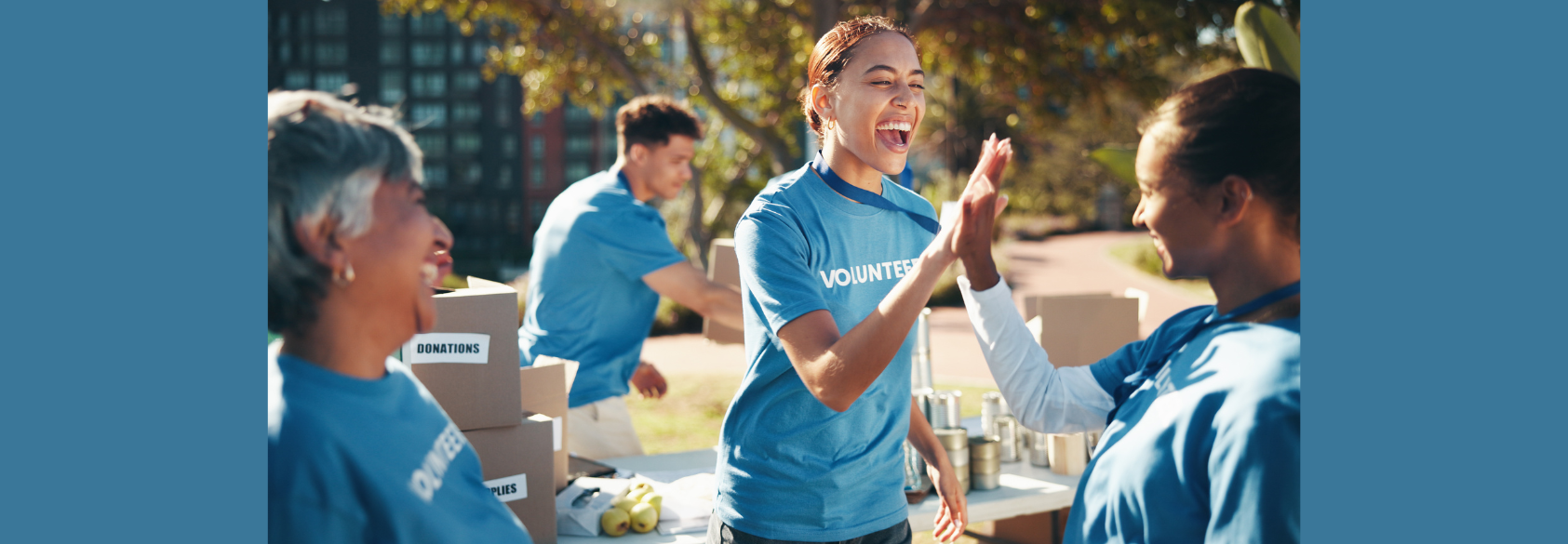
Importantly, volunteering does not have to mean taking on another overwhelming commitment. Even small, time-limited opportunities can yield benefits. One hour a month, seasonal participation, or skills-based volunteering can be enough to foster connection and meaning without adding stress.
Many AFT members already volunteer in ways they may not label as such: mentoring colleagues, advocating for students, supporting professional associations, or serving on community boards. Recognizing these contributions as volunteering matters—it validates the health benefits that come from civic engagement and mutual aid.
Unions and workplaces can support well-being by encouraging volunteerism, sharing opportunities and respecting boundaries so that giving remains energizing rather than depleting.
At its best, volunteering is reciprocal. Communities benefit from our skills and compassion, and we benefit from renewed purpose, stronger connections and better health. In professions centered on care, education and public service, volunteering can remind us that while we cannot fix everything, our presence still matters.
Taking care of ourselves is not separate from taking care of others. Sometimes, it starts with choosing to give—on our own terms—in ways that sustain both community and self.
Join Dr. Vin Gupta—pulmonologist, public health expert, and professor—for a yearlong series offering expert-led webinars, blogs, resources, and Q&A sessions on pressing health issues to help AFT members and communities stay informed and healthy. Access all on-demand town halls and register for the next one.
Want to see more stories like this one? Subscribe to the SML e-newsletter!