
. Skip to main content
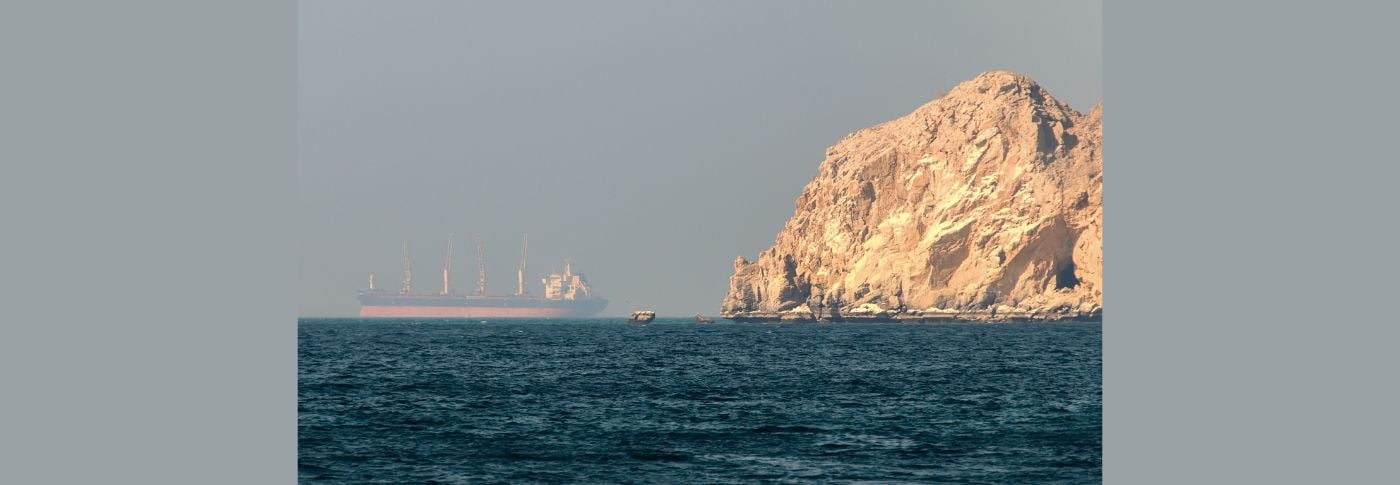
A cargo ship passes through the waters near Khasab in Oman's Musandam Peninsula, on the edge of the Strait of Hormuz

A cargo ship transits the waters off Oman's Musandam Peninsula, which borders the Strait of Hormuz, the narrow chokepoint through which 20% of the world's oil passes every day. Photo credit: atosan

What Is the Strait of Hormuz and Why Does It Matter?

March 12, 2026

What Is the Strait of Hormuz and Why Does It Matter?

What does a narrow waterway in the Middle East have to do with your gas prices and grocery bill? More than you'd think.
Share

Share On Facebook
Share On Twitter
Share On Pinterest
Share On LinkedIn
Email

Have you checked gas prices lately? Maybe you've noticed the numbers on the pump creeping up, or heard a parent grumbling about it at the grocery store. There's a reason for that, and it starts with a narrow strip of water on the other side of the planet. 
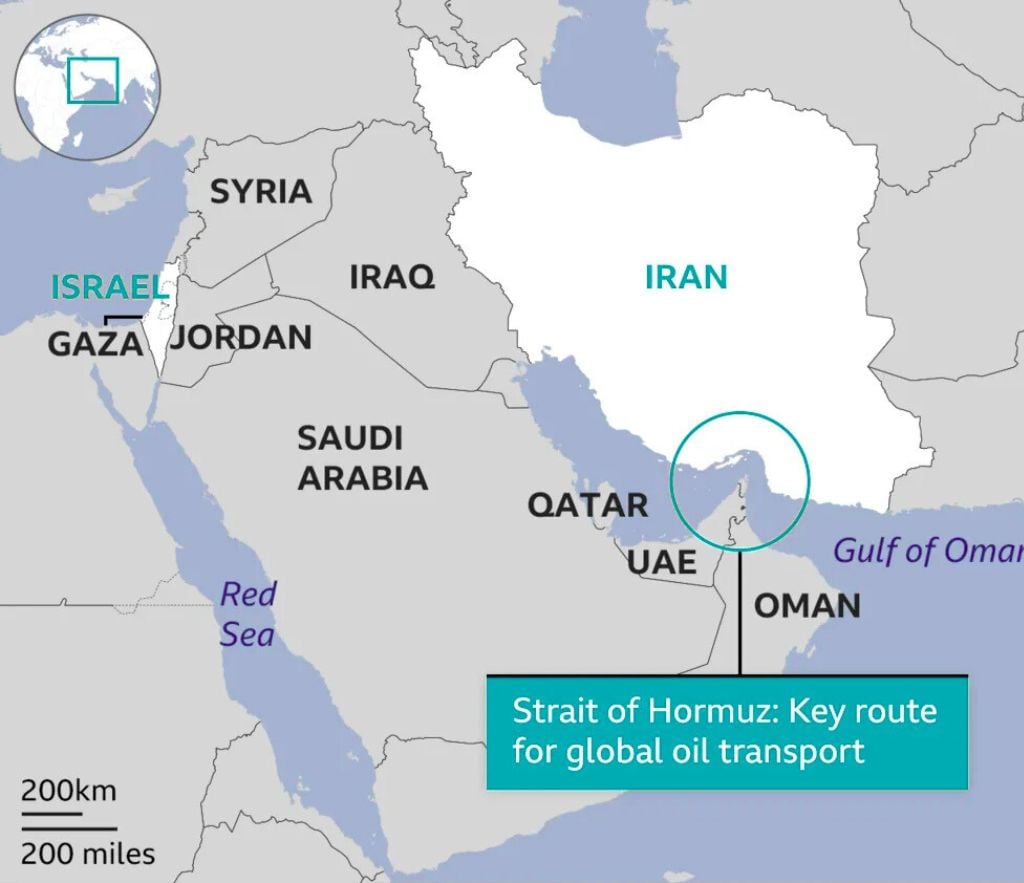
A BBC map of the Middle East highlighting the Strait of Hormuz between Iran and Oman as a key route for global oil transport, with Israel, Gaza, Iraq, Saudi Arabia, UAE, and Qatar also labeled.
The Strait of Hormuz, circled above, sits between Iran to the north and Oman to the south. Credit: BBC.

A conflict involving the U.S., Israel and Iran is reshaping the Middle East and sending shockwaves through the global economy, and a lot of it comes down to one geographic bottleneck: the Strait of Hormuz. Watch the short BBC explainer below to get oriented, and pay close attention to the two choke points mentioned and what happens when either one gets disrupted. 

Remote video URL

The Breakdown: How One Narrow Waterway Affects Gas Prices and Your Grocery Bill 

The U.S.-Israel conflict with Iran has made shipping companies nervous about sending tankers through the Strait of Hormuz. Oil prices are already rising as a result, which means higher gas prices and higher costs for the food you buy. 

Here's something that surprises most people: The U.S. is the world's largest oil producer and a net exporter. So why do American consumers still get hit when prices spike overseas? Because oil trades on a global market at a single price. Writing in the New York Times, policy analyst Rosemary Kelanic described it this way: Think of the oil market as a giant bathtub. The total level in the tub, plus market speculation, sets the price for everyone, regardless of how much any one country produces. 

The strait also carries nearly 50 percent of the world's urea exports and about 30 percent of its ammonia exports—both key ingredients in fertilizer. If those shipments slow down, food price increases follow. 

Key Terms/Cheat Sheet

  • Strait of Hormuz: A narrow waterway between Iran and Oman connecting the Persian Gulf to the Indian Ocean. About 20 percent of the world's oil passes through it daily. (Quick spelling note: it's "strait," not "straight." A strait is a narrow body of water, not a direction. Though given what's at stake here, "straight-up important" works too.)
  • Choke point: A narrow, strategic route that, if blocked, can disrupt global trade. Few alternatives means significant leverage for whoever controls it.
  • Urea and Ammonia: The primary ingredients in nitrogen fertilizer. According to the American Farm Bureau Federation, nearly 50 percent of global urea exports and about 30 percent of global ammonia exports pass through the Strait of Hormuz. Less of either means more expensive fertilizer, which means higher food prices.
  • Global oil market: Oil is bought and sold worldwide at a single market price. Even major producers like the U.S. feel the impact when supply is disrupted anywhere.
  • Oil intensity: How much oil a country uses relative to the size of its economy. The U.S. is more than 40 percent more oil-intensive than China, making it especially vulnerable to price shocks.
  • Strategic Petroleum Reserve: An emergency oil stockpile held by the U.S. government, currently around 415 million barrels, that can be released to stabilize markets during a crisis. 

Discussion Questions

Personal Connection: Before this lesson, did you ever think about what factors influence gas prices or the cost of groceries? What surprised you most? 

Geography and Power: Why would a 39-kilometer-wide waterway have this much influence over the global economy? What does that tell us about how interconnected the world is? 

Multiple Perspectives: The U.S. is the world's largest oil producer, yet American consumers still feel price spikes from halfway around the world. Who benefits from the current global oil system, and who is most vulnerable to it? 

Equity and Food Security: If urea shipments slow down and fertilizer gets more expensive, which communities or countries would likely feel it most? Why? 

Big Picture: Some experts say the long-term fix is reducing U.S. dependence on oil through electric vehicles and clean energy. Others say that's not realistic in the short term. What trade-offs do you see in each approach? 
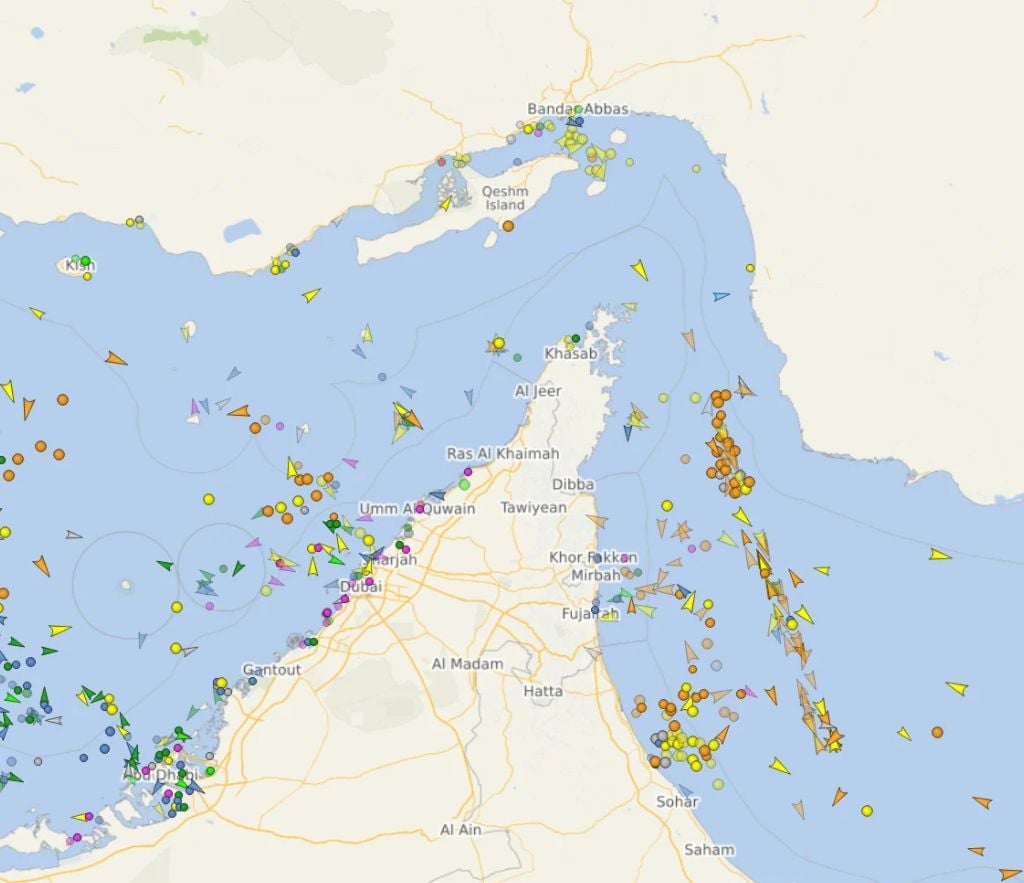
A vessel tracking map showing ship traffic in the Strait of Hormuz as of March 10, 2026, with dozens of vessels represented by colored markers and arrows near Iran, the UAE, and Oman.
Ship traffic in the Strait of Hormuz on March 10, 2026. Image: VesselFinder.

Media Literacy Challenge 🔍 

  1. Who is speaking? The BBC video is a public broadcaster. The New York Times piece is an opinion essay by a policy expert. How might the source or format shape what gets emphasized?
  2. Compare the coverage. Search "Strait of Hormuz" on one U.S. news outlet and one international outlet. What details does each include? What's missing?
  3. Follow the data. The video says oil prices "have gone up." Find a chart showing current oil price trends. What does the data actually show, and over what time period?
  4. Spot the opinion. The New York Times piece is labeled an opinion essay. What's the author's main argument? What evidence supports it? What questions would you want answered before forming your own view?

Extension Activity: Local Gas Price Tracker

  1. Set a baseline. Record today's average gas price in your area using GasBuddy or a local station. Note the national average for comparison.
  2. Track weekly. Check and record prices each week. Build a simple line graph over time.
  3. Connect to the news. Each week, note one headline about the Strait of Hormuz or oil markets. Does the news seem to move local prices? How quickly?
  4. Reflect. What did you learn about how global events affect everyday life? What surprised you? 

Optional upgrade: Compare gas prices across different ZIP codes in your region. Are prices higher in some neighborhoods? What might explain that? 

Lesson Plans on Global Politics

Find more resources on global politics and how they relate to your students with our free collection of preK-12 lesson plans and teaching resources.

Andy Kratochvil
Andy Kratochvil is a proud member of the AFT Share My Lesson team, where he’s passionate about discovering and sharing top-tier content with educators across the country. He earned his bachelor’s degree in political science and French from California State University, Fullerton, and later completed... See More
Advertisement

Post a comment

Log in or sign up to post a comment.